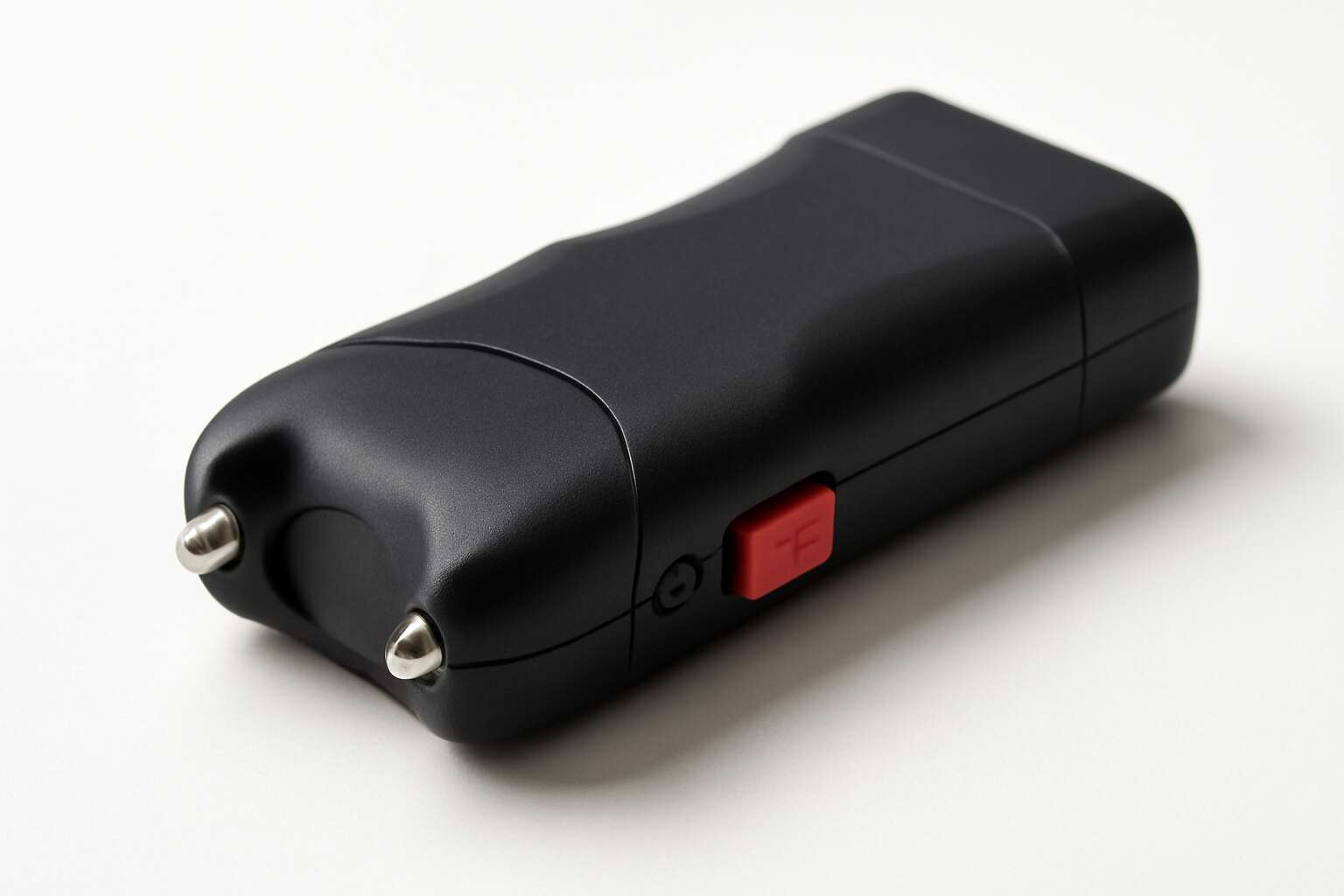
Understanding stun guns: definition and purpose
What is a stun gun
“Safety in the moment matters more than bravado,” a security consultant notes. A stun gun is a compact, handheld device that delivers a high-voltage, low-current shock to disrupt voluntary muscle control and deter an attacker. For anyone asking “stun gun what is it?”, the answer is simple: a non-lethal safety tool designed to create a window for escape.
Its purpose is to deter aggression and provide a brief incapacitation that allows a person to disengage and seek help. The device relies on a momentary disruption of muscle control rather than lasting harm, and it is typically carried for personal protection in urban settings or quiet neighbourhoods.
- Non-lethal by design
- Deploys at close range
- Intended to create an escape opportunity
In South Africa, discussions around personal safety increasingly include non-lethal options as part of broader protection strategies. Understanding what it is helps compare devices, weigh legal responsibilities, and assess whether a stun gun aligns with safety goals.
Core features and how it works at a glance
In South Africa’s urban tapestry, personal safety options range from street-smarts to gadgets with a wink of modern science. A security consultant puts it plainly: safety in the moment matters more than bravado. If you’re wondering ‘stun gun what is it’, think of this compact device as a close-range deterrent—designed to buy time to disengage and seek help.
Core features and how it works at a glance:
- Compact, ergonomic design for easy carry
- High-voltage, low-current output to disrupt voluntary control
- Simple safety mechanisms and straightforward activation
- Rechargeable battery with durable construction
Operationally, the pulse is a brief disruption of muscle activity rather than lasting harm—creating a moment to escape and summon assistance, ideally suited to urban settings and quieter neighbourhoods.
Common myths and misconceptions
For many South Africans, safety isn’t an abstract concept—it’s a practical habit. When someone asks (stun gun what is it), the answer isn’t cinematic—it’s a compact, close-range deterrent designed to buy a moment to disengage and seek help.
Common myths deserve a quick debunking, because misconceptions can blur judgment more than any gadget on a shelf.
- Instant, painless incapacitation is guaranteed.
- It’s illegal in every place and always easy to spot.
- All devices work the same way, regardless of model or wattage.
Understanding its essence reveals a practical truth: the device relies on a brief muscular disruption rather than domination. Its aim is deterrence, not theatrics, and to grant you a safe exit. The urban South African reality respects prudence over bravado.
How stun guns work and technology
Electrical mechanism and stun delivery system
A spark of safety in South Africa’s crowded streets—the right non-lethal option can cut injury risk in confrontations by up to 60%. stun gun what is it? It’s a compact device that blends portability with a controlled energy jolt, designed to deter threats without lethal force.
Electrically, the mechanism hinges on three systems: a storage capacitor, a pulse oscillator, and a transformer that raises voltage while keeping current safe. When triggered, rapid pulses travel through two electrodes, delivering a brief high‑voltage volley that disrupts muscular coordination and awareness—designed to work through clothing at close range, with built‑in safety interlocks.
- Storage capacitor and pulse oscillator
- High-voltage transformer
- Dual-electrode stun delivery system
These elements combine to form a practical personal-safety tool, balancing deterrent power with reliability in urban SA environments.
Voltage, current, and safety considerations
stun gun what is it? A compact device blending portability with a controlled energy jolt, designed to deter threats without lethal force. The core idea is high-voltage pulses delivered with precise timing to disrupt coordination momentarily while keeping current safe.
Voltage and current act in concert: voltage provides the reach, while current defines the energy that travels through fabric to nerves. The result is a brief jolt that interrupts movement and awareness, assisted by safety interlocks and tightly managed pulse lengths.
- High-voltage, low-current pulses focus the deterrent while keeping injury risk low.
- Short, controlled pulses maximize disruption of coordination over tissue damage.
- Built-in safety interlocks minimize accidental discharge and ensure deliberate activation.
In South Africa’s urban landscape, these devices balance practical form with physics-based safeguards, offering a non-lethal option that respects the pace and peril of city life.
Different types of stun devices
Across South Africa’s urban streets, a growing curiosity surrounds non-lethal protection. A recent urban safety survey indicated that 7 in 10 adults in metropolitan areas express interest in non-lethal options. For readers wondering stun gun what is it, the answer lies in a blend of portable design and precise energy delivery that deters threats without causing lasting harm.
Technically, these devices deploy rapid, focused energy bursts that interrupt nerve signals long enough to create space between a person and a threat. Short pulse lengths and built‑in safety interlocks keep the experience controlled, while currents travel through clothing and skin with minimal lingering effects.
Types vary by delivery method and form factor, including:
- Pen-style stun devices
- Probe-based devices (taser-like)
- Stun batons
Power sources, durability, and charging
Across South Africa’s urban streets, personal safety tech is maturing with quiet efficiency. stun gun what is it often points to a blend of portable design and precise energy delivery that deters threats without lasting harm.
Power sources drive reliability. Most models rely on rechargeable or replaceable cells designed for repeated cycles. Quick-charge modes, smart protection circuits, and weather-ready housings keep performance steady in changing conditions.
- Rechargeable lithium‑ion or polymer cells for extended life
- Replaceable batteries for field servicing and flexibility
- Integrated charging indicators and secure connectors to prevent misconnection
Durability and charging infrastructure shape readiness. Rubberized casings, non-slip grips, and sealed compartments guard sensitive electronics from dust, moisture, and minor drops — ensuring the device remains a trusted companion when needed most!
Safety, legality, and responsible use
Legal status by region and typical restrictions
In the shadowed bustle of South Africa’s night markets, safety devices anchor calm. If you ask, “stun gun what is it,” the answer gleams like a sigil: a nonlethal instrument designed for deterrence, not conquest, forged for personal protection and relief in fearsome moments.
Safety, legality, and responsible use guide every decision. Laws vary by province and context; in general, private possession is legal where allowed, but public carry often carries restrictions. Treat the device as a charged instrument of last resort—never used to intimidate or inflict harm.
- Age restrictions (commonly 18+)
- Prohibited locations (schools, airports, government facilities)
- Permits or registration in some regions
Respect for boundaries and responsible storage completes the circle of stewardship that empowers this technology to protect rather than provoke.
Safety guidelines for handling and storage
Across South Africa’s bustling streets, safety devices quietly anchor calm in the chaos! The phrase stun gun what is it often surfaces in moments of doubt, revealing a nonlethal line—deterrence without domination, protection without conquest.
Safety, handling, and storage operate as a triad of stewardship. Treat the device as a charged instrument of last resort and respect boundaries—out of reach of children, away from moisture, and kept in a secure environment where access is limited to trusted individuals. A brief checklist below captures the spirit:
- Access control and secure storage to prevent unauthorized use
- Environmental safeguards to protect device integrity
- Regular inspections for seals and batteries’ health
Legality is context-dependent; compliance with local regulations and age restrictions remains paramount. In practice, responsible use aligns with the broader aim of safety—protection and peace of mind, not provocation.
User responsibility and liability
Protecting yourself on South Africa’s streets isn’t a thrill ride—it’s planning. “Preparation beats panic,” says a local safety consultant, and the right device can be part of that plan. The question stun gun what is it often surfaces in moments of doubt, revealing a nonlethal line—deterrence without domination, protection without conquest.
Legality varies by region and context; South Africa’s rules hinge on age, intent, and discharge scenarios. Compliance isn’t a luxury; it’s liability insurance. If you choose to own one, ensure you understand your local regulations, maintain records, and store it securely.
- Understanding local regulations and age restrictions
- Maintaining documentation of ownership and responsible use
- Training and competency in safe handling
Responsible use hinges on de-escalation and clear boundaries. If you deploy a device, you’re not just a consumer; you’re a custodian of safety—and potential civil liability rests with your choices, not the device alone. Treat it as a tool of last resort, never a toy.
Ethical considerations and self-defense context
In SA’s unpredictable streets, safety isn’t bravado—it’s preparation. stun gun what is it you might ask, and the answer sits between deterrence and responsibility: a nonlethal option that deserves sober handling rather than swagger.
Ethical considerations in a self-defense context are not optional:
- De-escalation priority over confrontation
- Compliance with local laws and age restrictions
- Safe storage and clear records of ownership
Ultimately, responsible use treats the device as a tool of last resort, not a prop. In this context, the user carries liability alongside protection, and the law is the compass that keeps the line between safety and overreach intact.
Choosing, comparing, and buying a stun gun
Key factors when selecting a device
Choosing a stun device isn’t a rush of impulse; it reads like a quiet vow to safety. Readers often ask stun gun what is it, and the answer threads through purpose, grip, and safety. A well-balanced unit sits naturally in the hand, with clear activation and a sturdy grip that respects fatigue and weather. It should feel contained, not brash, and invite responsible handling.
Beyond appearance, the core factors fall into these practical realms:
- Ergonomics and grip comfort
- Durability and weather resistance
- Reliability of power source and charging options
- Brand reputation and local compliance
Finally, consider maintenance, service options, and how a device integrates with your daily routine, while staying mindful of the South African security landscape.
Battery life, charging times, and reliability
Security is a whisper that follows you into the doorway of every new day. When readers ask “stun gun what is it,” the answer unfolds through three quiet criteria: battery life, charging times, and reliability. A well-chosen unit rests in the hand with balance and calm, ready when needed but never brash.
Consider these practical notes as you compare:
- Battery life and stand-by readiness
- Charging times and available power options
- Reliability under varied weather and usage
Perhaps most telling is how it slots into your routine: lightweight, USB-C charging, and local service options in South Africa. Seek models backed by clear warranties and accessible replacement parts, ensuring your choice remains a trusted companion long after the initial purchase.
Security features and safety mechanisms
Choosing a stun gun begins with a quiet inventory of safety features. The question “stun gun what is it” becomes a doorway to responsible selection: balance, grip texture, and a deliberate safety switch that prevents accidental discharge. A well-made unit feels calm in the hand, ready but never pushy, with a design that respects both user and bystander.
Key security mechanisms to look for include:
- Manual safety switch and discharge lock
- LED indicators for battery health
- Auto-shutoff timer to limit exposure
- Rugged, weather-resistant housing with a secure grip
This thoughtful combination keeps everyday use calm and responsible in South Africa.
Choose models with clear warranties, local South African support, and ready replacement parts to sustain trust.
Popular models by category and price range
Thinking about your security toolkit in South Africa often begins with questions like “stun gun what is it” — a doorway to understanding how compact devices offer deterrence without drama. Choosing means weighing grip texture, safety switches, and a calm, reliable delivery that respects bystanders as well as you.
Popular models by category and price range include:
- Entry-level compact models: discreet pocket-friendly units typically under R800, with basic safety features and simple operation.
- Mid-range rugged designs: weather-resistant and dependable, roughly R800–R1500, suitable for daily use and more demanding environments.
- Premium professional-grade units: enhanced durability and longer battery life, often above R1500, targeting frequent users and security professionals.
When buying, prioritize clear warranties, local South African support, and ready replacement parts to sustain trust in your purchase.
Warranty, support, and after-sales considerations
Security isn’t a momentary impulse—it’s a commitment, and the right after-sales network makes it enduring. As you navigate “stun gun what is it” in practice, think of warranty and support as the quiet allies behind your device.
In South Africa, look for warranties that cover both the device and key components, clear claim steps, and a local support footprint. A longer warranty isn’t always better if parts are scarce, so verify availability and authorized repair centers.
- Clear warranty duration and what it covers
- Local South African support and authorized service partners
- Fast replacement parts availability and minimal downtime
Beyond coverage, ask about service turnaround times, repair vs. replacement policies, and how you report issues. A reliable after-sales experience keeps your safety net intact and your toolkit ready for action when you need it.

0 Comments